
A filmed conversation about complex technology needs to make the people and the subject clear. When that conversation becomes a ten-episode series, the production also has to repeat its visual standard across different contributors without making the discussions feel mechanical.
Amazon Web Services’ This Is My Architecture series provides a useful example. For its London production, Seattle-based 2A Consulting worked with 42 Video to film ten interview-led episodes at AWS’s offices. The brief called for an established format, a secure working location and a tightly managed schedule. 42 Video provided the local production team, technical setup and on-site coordination for the London leg. You can see the full scope in the AWS project case study.
For brands and agencies planning a similar series, the central question is how to give every expert enough room to explain their ideas while keeping the production dependable from one episode to the next.
Define What the Audience Must Be Able to See
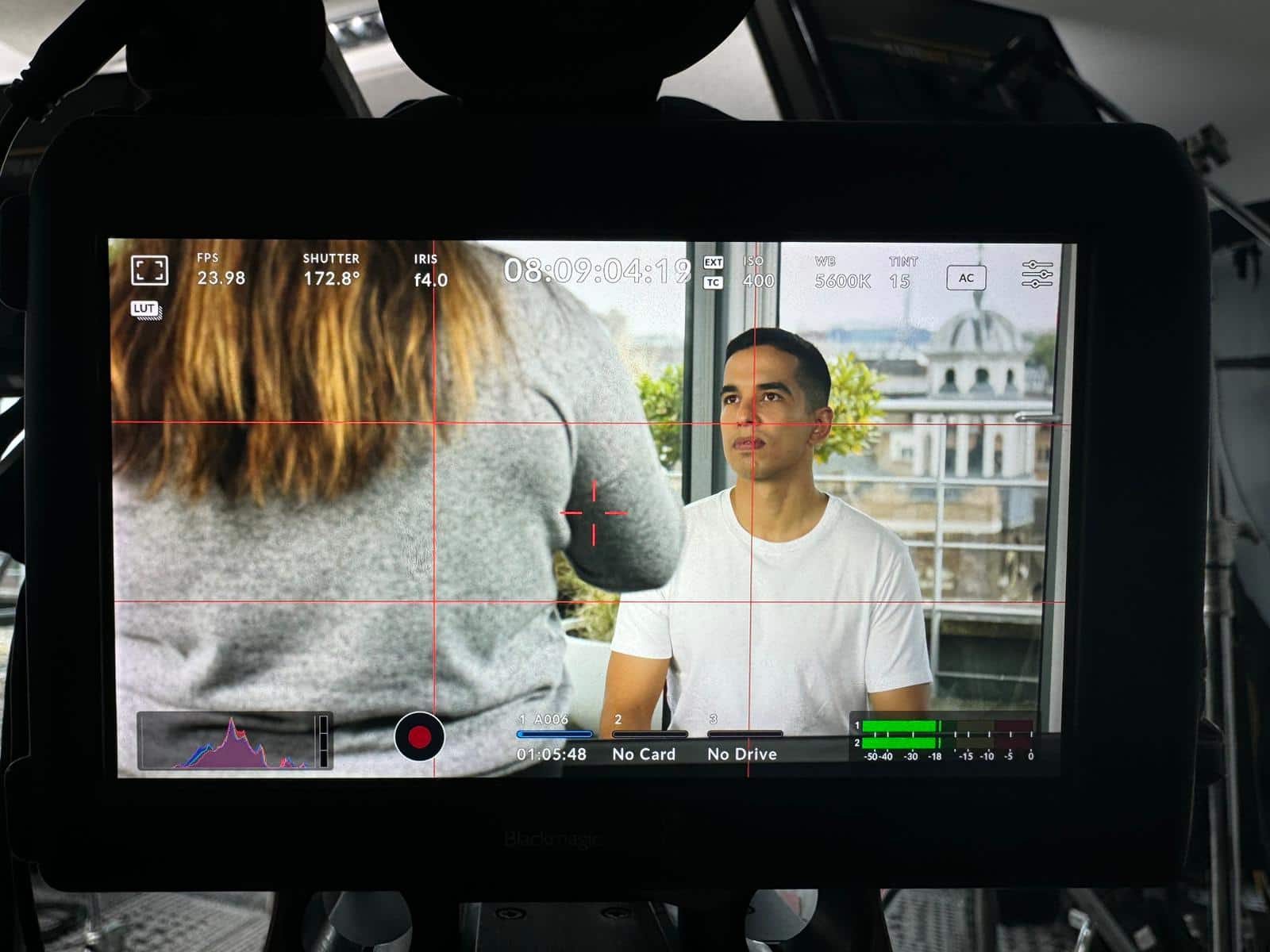
In a conventional interview, coverage of the speaker and listener may be enough to tell the story. A technical demonstration asks more of the camera plan. Viewers may need to understand a diagram, follow a presenter’s gesture and see the exchange between two people without losing the thread of the explanation.
The AWS format paired a host with a representative from a customer or partner organisation. Contributors used a digital Vibe Board to map out their architecture as the discussion developed. That board was part of the explanation, so its visibility could not be left to chance.
The London shoot used four camera perspectives: coverage for the host and guest, a wider view of their interaction and an overhead angle for the board. Recording those views together let the discussion continue naturally while giving the edit the material needed to clarify individual points.
Before choosing a camera count for your own series, identify which information the viewer must see at the same moment. That answer should drive the technical design.
Protect Consistency Across Episodes
A recurring format helps an audience know what to expect. It also gives the production a visual standard to maintain. Framing, eyelines, exposure, colour and sound need to remain coherent as different contributors move through the set.
Consistency becomes particularly important when a series is filmed over more than one day. Minor changes in camera height, lighting or background can become conspicuous when episodes sit next to each other in a library. A technical plan should record the agreed setup so the team can return to it without rebuilding decisions from memory.
That does not mean every discussion should feel identical. The underlying format can remain steady while the questions and demonstrations reflect the particular organisation on screen. In a technology series, that balance lets viewers concentrate on the expert’s ideas rather than on changes in production quality.
The same thinking applies to video production for technology companies: the visuals should help people follow the subject while preserving the credibility of those explaining it.
Treat the Location as Part of the Brief
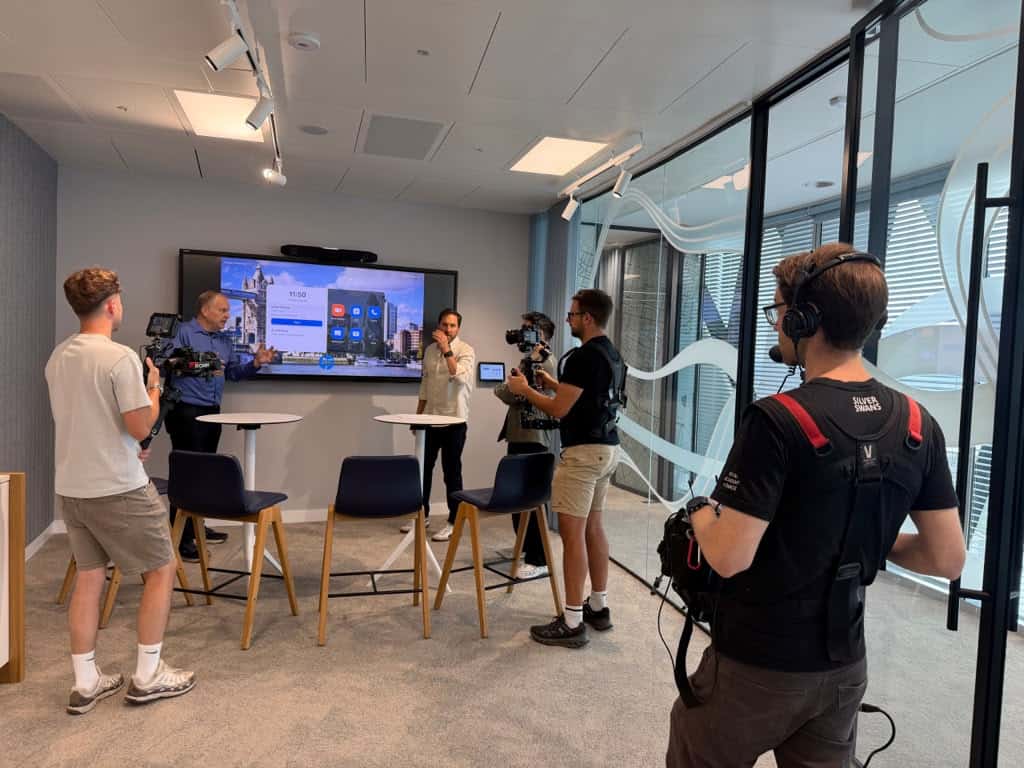
An office can be a suitable filming location, but it may need significant preparation to work like a controlled set. The production team should assess room size, access, power, available rigging positions, sound and how the normal activity of the building will affect the schedule.
The AWS London production took place in a secure corporate office. Crew registration, equipment access, risk assessments and room use had to be planned in advance. Inside the conference room, the team needed space for four cameras, lighting, sound treatment, monitoring and the overhead board shot.
A location visit or technical planning stage is valuable because it turns assumptions into specific decisions. Can equipment reach the room at the required time? Is there enough clearance for a camera above a demonstration surface? Will a nearby ventilation system be audible throughout an interview? These questions are much easier to solve before contributors are waiting to film.
Our line production services in London support the location, access and scheduling work that makes a demanding shoot possible.
Give Sound the Same Attention as Picture
Technical interviews depend on precise words. A clear board view cannot rescue a discussion if the audience struggles to hear the explanation. Office environments can introduce persistent ventilation noise, reflections from hard surfaces and interruptions from people working nearby.
During preparation for the AWS project, the production team identified continuous ventilation noise that could not simply be switched off. Sound-dampening treatment was incorporated into the room setup. Addressing the issue before filming helped protect the dialogue across the series.
For any interview-led programme, the sound plan should account for the real location. That includes where microphones can sit, how contributors will move, what can be controlled in the room and what background noise will remain. A short technical check before the first contributor arrives can prevent the same problem from appearing in every episode.
Allow Time for a Pre-Light and Technical Test
When a format depends on several simultaneous camera angles, the first filming slot should not become the moment the crew discovers whether the plan works. A pre-light gives the team time to position equipment, test shots and check that all perspectives can be captured safely.
The AWS crew used its preparation day to build the filming environment and respond to the room’s constraints. The original approach to the overhead view needed adapting because of the low ceiling. Solving that before the interview schedule began protected a defining element of the series.
A pre-light may also expose less dramatic issues: reflections on a screen, an unhelpful eyeline or a lighting change that makes one camera angle look different from another. The value lies in having time to correct them without taking that time from an expert who has travelled to appear in the film.
The appropriate level of preparation depends on the production. For a repeatable ten-film format in a secure location, it is part of delivering the promised standard.
Build the Crew Around Simultaneous Tasks
A multi-video shoot can involve many activities at once. Cameras need operating and monitoring. Sound needs attention. Contributors must arrive, prepare and know when they are needed. Footage has to be handled properly. The client and agency need clear communication while the schedule continues to move.
For the AWS London leg, 42 Video assembled an 11-person filming and production team and coordinated the technical package. Roles covered production management, camera, lighting and grip, sound, DIT and hair and make-up, among other needs. The size of the team reflected the work happening concurrently rather than a desire to put more people in the room.
A useful crew brief starts with the tasks and their timing. Which roles must be active during every take? Who is responsible for the next contributor while the current episode is filming? Who checks recorded material and prepares the handover? The answers determine whether the shoot needs individual specialists or a complete local unit.
For international agencies, a filming crew for hire can provide those roles alongside local production coordination.
Schedule People, Not Just Episodes
Ten videos on a production plan may look like ten equal blocks. In reality, contributors have different travel arrangements, levels of camera experience and technical stories to explain. A timetable needs space for preparation, the conversation itself and the handover to the next guest.
On the AWS project, customers and partners came into one location for two filming days after a preparation day. The production team worked with the agency to coordinate arrivals, filming windows, hair and make-up, breaks and contingency time. That organisation mattered because a delay in one slot could affect several people later in the day.
When planning a series, decide what information contributors need in advance. Explain the format, the expected use of the board or demonstration and the practical arrangements for arrival. The aim is to help each person enter the conversation ready to share their expertise, without scripting away the useful detail that makes their episode distinct.
Agree the Agency and Local Partner Responsibilities
An international agency may already have an established creative format, client relationship and editorial lead. It still needs local people who can translate that plan into a workable shoot, coordinate suppliers and respond to what the location allows.
For This Is My Architecture, 2A Consulting retained the wider creative direction while 42 Video handled the London production requirements. Clear responsibilities meant the agency’s format could be maintained without requiring its team to assemble every local department separately.
That model is useful for overseas agencies, in-house brand teams and production companies expanding an existing series into the UK. It begins with a detailed handover: the approved format, camera references, technical expectations, approval route and final deliverables. The local team can then test those requirements against the proposed room, schedule and crew.
The result should feel like one production, even when creative leadership and on-the-ground delivery sit with different teams.
Make Complex Ideas Easier to Follow
Production quality serves the explanation. Matching camera angles, readable diagrams and clean sound give viewers a better chance of understanding a specialist subject. A repeatable format also lets experts concentrate on what their organisations have built rather than on unfamiliar filming arrangements.
The AWS London shoot delivered ten episodes within that established series format. Its case study illustrates how crew planning, technical preparation and location management support the content on screen.
If you are planning interview-led technology films in the UK, explore 42 Video’s video production for technology and London line production services. Send us the format, proposed location and number of episodes through the project enquiry form, and we can discuss the production support your series needs.