
A publisher might have twenty promising headlines waiting for video treatment. A brand might have enough product knowledge, customer questions and campaign ideas to fill months of content. The challenge is turning that material into films people want to watch while keeping the production manageable.
The work becomes more demanding as the number of films grows. Every idea needs a purpose, a script, a visual approach and a route through approval. Some can share a filming setup; others need contributors, props or animation. Editors must keep track of feedback and versions across the entire series. Without a plan for those moving parts, a busy content calendar can quickly become a collection of unrelated shoots.
At 42 Video, we approach a larger brief as a content programme. The production process should give each film enough creative attention while allowing the whole series to move forward. Our Yahoo UK short-form video project is an example: 21 original films were developed from editorial titles and subject ideas across entertainment, lifestyle, food and factual topics.
Start With the Job Each Video Needs to Do
Before discussing cameras or shoot days, identify why each title deserves to become a film. A useful starting question is what the viewer expects when they choose to watch it. “How to tie a tie” makes a direct promise: the viewer should be able to follow the process. An entertainment countdown asks for curiosity, recognition and a satisfying sequence of reveals. A factual comparison needs to help people understand two options.
Those differences affect the opening seconds, the information included and the way the film should end. A content team may have several good ideas that are actually trying to do the same job. Reviewing them together makes it easier to choose the strongest treatment for each one and avoid producing near-duplicate assets.
This stage also helps with approvals. If stakeholders agree what a film is meant to achieve before a script is written, feedback can focus on whether the treatment fulfils that purpose. Discussions become more useful than a general preference for one style or another.
Turn Titles Into Treatments Before Scheduling a Shoot
A headline is a starting point, not a finished production brief. It suggests a subject but does not settle the angle, visual structure or practical requirements. Developing a treatment means working out the central promise, the order of the information and what viewers need to see rather than simply hear.
Consider a food demonstration. The script might contain only a few lines, yet the visual plan could require ingredients in different stages of preparation, close-ups of a technique and repeatable actions for continuity. A factual subject may need research, illustrated comparisons and an editorial check before it reaches animation. An entertainment piece may depend on a presenter’s delivery and carefully chosen supporting visuals.
Treatments make these differences visible while there is still time to plan them. They also help producers spot shared requirements across the series. Several food films may use the same kitchen setup; several presenter-led titles may fit into one filming block. Those efficiencies come from understanding the scripts, not from assuming that all short videos are simple to make.
Build a Series Framework With Room for Variety
A series benefits from recognisable elements. Graphic rules, caption treatment, sound, pacing and approval stages can give viewers and internal teams a sense of consistency. That does not mean every film needs the same opening shot or identical structure.
The Yahoo UK brief covered distinctly different subjects. Lifestyle demonstrations needed a clear view of practical steps. Entertainment films worked through timing and anticipation. Factual pieces sometimes called for animation because the ideas were easier to explain through designed visuals. A common production framework held the programme together, while the treatment changed to suit each title.
For a brand, the consistent element might be a host, a visual identity or a question-led format. For a publisher, it may be an editorial standard and a dependable way to move from commissioned title to finished film. The useful test is whether the framework helps the team produce stronger work. If it makes a good idea harder to tell, it needs adjusting.
Group Filming Around What the Scripts Share
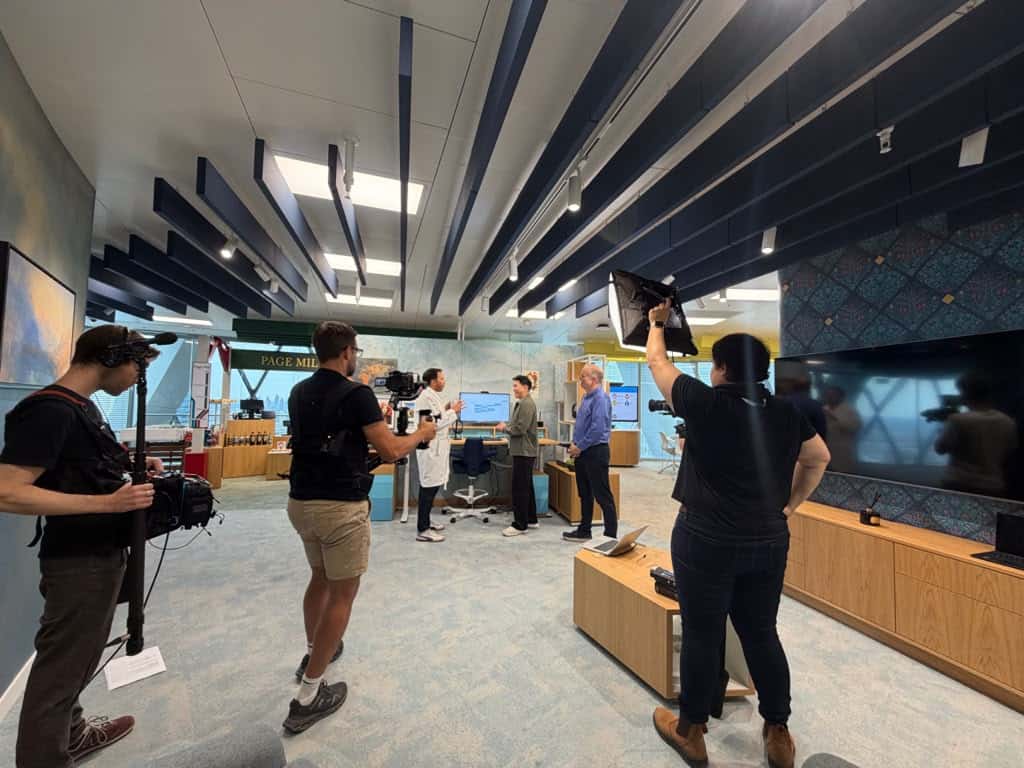
Batch filming can make a substantial programme more efficient, but only when the schedule reflects the work. Grouping films by location, contributor, set or technical setup can reduce repeated preparation. Scripts and props need to be ready early enough to make that grouping worthwhile.
A sensible filming order also accounts for the details that cannot be rushed. A demonstration may need several takes from different angles. A presenter may need time to learn unfamiliar terminology. A change of background or lighting may be important to keep two otherwise similar films visually distinct. Producers should know where those changes sit in the schedule before the crew arrives.
This is why production planning and creative planning belong together. The person organising the shoot needs to understand what each film is trying to show. The creative team needs to understand the time and resources available to capture it properly. A schedule built through that conversation is more reliable than one based only on the length of the finished videos.
Choose Live Action or Animation for the Subject
There is no requirement for an entire short-form library to use one technique. Live action is well suited to demonstrations, people, places and physical detail. Animation can explain a comparison, reveal an unseen process or bring an unusual factual subject to life.
The Yahoo UK series used both. Films such as Weirdest Cleaning Habits from History and Tap Water vs. Bottled Water show how designed visuals can support an informative short film. Other topics, particularly food and lifestyle demonstrations, benefited from filming the action itself.
The decision should be made while developing the treatment. Choosing animation late because footage is missing can put pressure on the schedule; filming a subject that would be clearer through graphics can create unnecessary complexity. Where a programme includes several animation-led titles, our animated video production team can help plan their visual language alongside the live-action work.

Make Review and Version Control Part of the Production Plan
One film can often be reviewed through a straightforward exchange of notes. Twenty films need a clearer system. Each title should be easy to identify, and each review stage should make it obvious which cut is current and what feedback has already been addressed.
Agree who can approve scripts and films before production begins. Decide whether stakeholders will send one consolidated set of comments or several separate responses. Set out how changes to factual claims, branding, captions and final formats will be handled. These choices sound administrative, but they have a direct effect on the finished work: editors can act more accurately when feedback is clear.
A managed review process also helps protect deadlines. If one title needs a more substantial change, the team can see what that means for the wider schedule rather than discovering the problem at the point of delivery. This is especially valuable for publishers and in-house teams working towards planned release dates.
Plan for the Places the Films Will Appear
Short-form content may be published on a brand’s own website, a publisher platform, YouTube or social channels. Each destination can affect how a viewer first encounters the film. A title or thumbnail may do some of the work on a website, while a social feed may require the subject to become apparent within the opening shot.
Knowing the destinations early helps shape framing, graphics and captions. It also allows the production team to plan requested aspect ratios and versions before filming. A critical detail captured at the edge of a widescreen frame may not survive a vertical edit. A graphic designed for one display size may be difficult to read elsewhere.
This is where short-form series production and social media video production meet. Distribution requirements should inform the creative and technical plan, even when a film’s first home is a publisher site rather than a social feed.
Measure the Series Honestly
Before publication, agree what success means for the programme. A publisher may care about views, engaged viewing and the usefulness of an evergreen library. A brand may want to understand whether the films help answer customer questions or support a campaign. An agency may need to judge the quality, consistency and timely delivery of multiple assets as well as audience response.
The Yahoo UK case study reports more than 550,000 views across selected promoted films for which figures were documented. That is a result for those measured assets, not a claim about every film in the library. Clear wording matters when reporting a series: totals, time periods and the group of videos measured should be identifiable.
Performance can also inform the next commission. Which premises attracted interest? Which topics needed a different treatment? Which production arrangements helped the team deliver efficiently? A series creates the opportunity to learn across several films rather than treating each release as an isolated event.
Build a Production Model Your Team Can Use Again
A successful batch should leave a content team with more than finished files. It should clarify how ideas are selected, who approves scripts, what can be filmed together and which deliverables are needed for each channel. That knowledge makes the next commission easier to scope and gives agencies and internal teams a common language for the work.
If you have a bank of ideas and need a partner to turn them into a coordinated programme, explore 42 Video’s short-form video production service. Share the volume, subjects and intended publishing schedule through our project enquiry form, and we can help develop a production approach for the series.